TL;DR
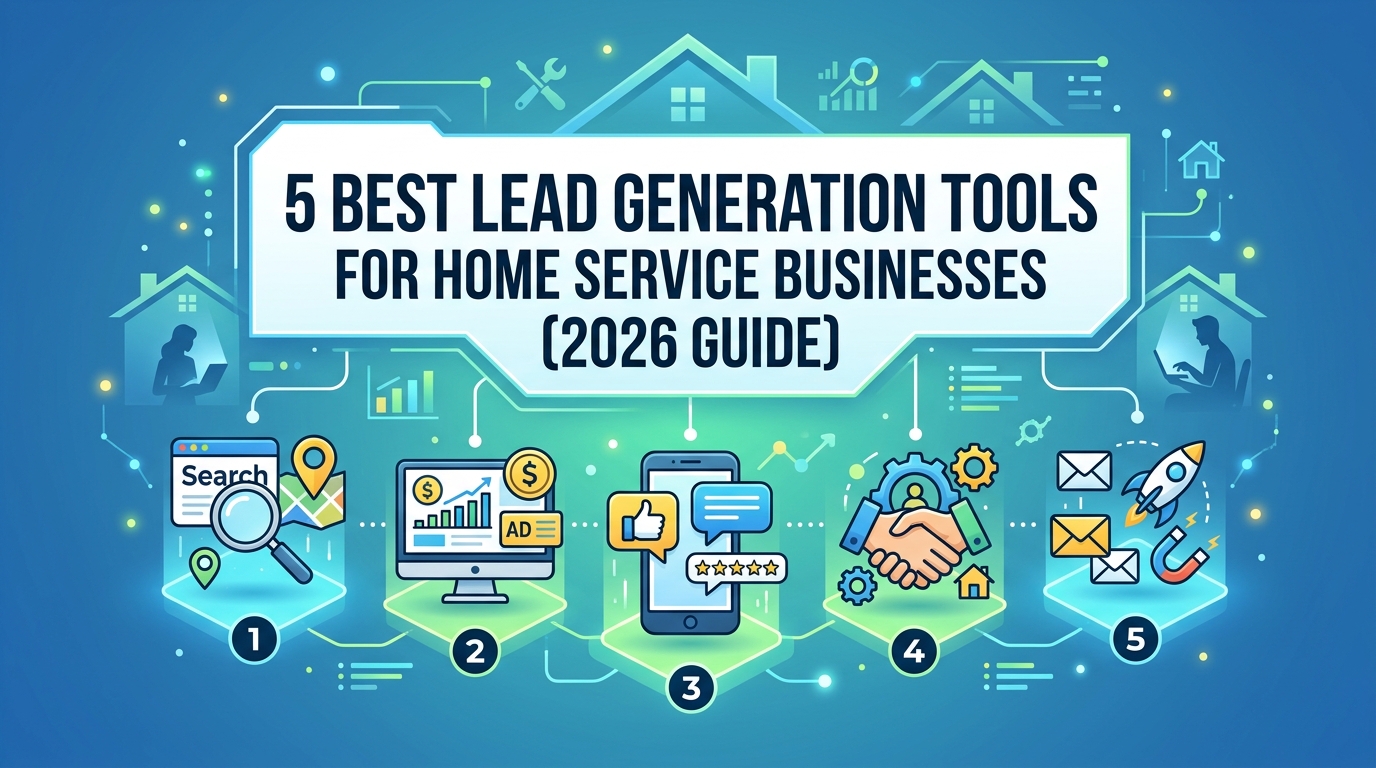
Here are five of the more common lead sources home service businesses use, and what each one is best at:
- GroupSignal: best for catching Facebook group requests while they're still worth replying to.
- Google Local Services Ads: best for homeowners actively searching for your service right now.
- Angi: best for tapping an established homeowner marketplace with existing demand.
- Thumbtack: best for pros who want control over which job types they get matched with.
- Field service booking software: best for converting the leads you already have into booked, paid jobs.
What to look for
In home services, the first business to give a useful reply usually has the best shot at the job. Whatever mix of tools you use, weigh each one on the same handful of things: how fast a lead reaches you, how much genuine buying intent it carries, whether you can filter out the job types you don't want, and what it actually costs per job booked rather than per lead delivered.
1. GroupSignal: Best for Facebook Group Requests
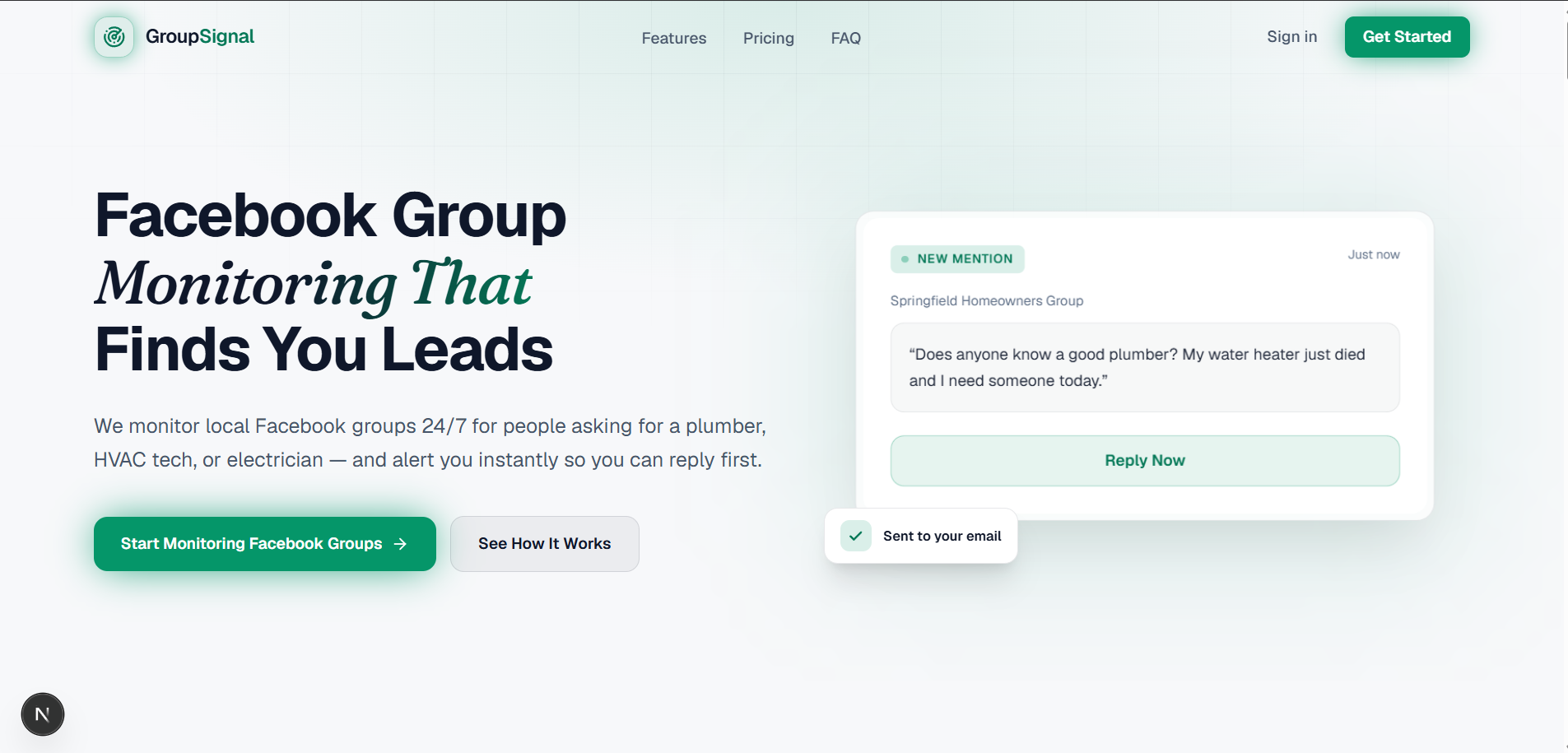
Homeowners ask their local Facebook groups for a recommendation constantly: "can anyone recommend a plumber who can come today?" is a normal Tuesday post in most neighborhood groups. GroupSignal watches the groups you choose, public and private, and sends an alert the moment a post matches your trade and service area, so you can reply while the thread is still active.
You give it the group links, not your Facebook login. There's no admin access to arrange and no keyword list to maintain since matching is based on what you actually do, not rigid phrases.
Key features:
- Public and private group monitoring, without needing admin access to either.
- No personal Facebook login required to run.
- Alerts sent straight to your inbox as soon as a match is found.
- Runs continuously, so you're not the one checking groups all day.
2. Google Local Services Ads: Best for Active Searchers
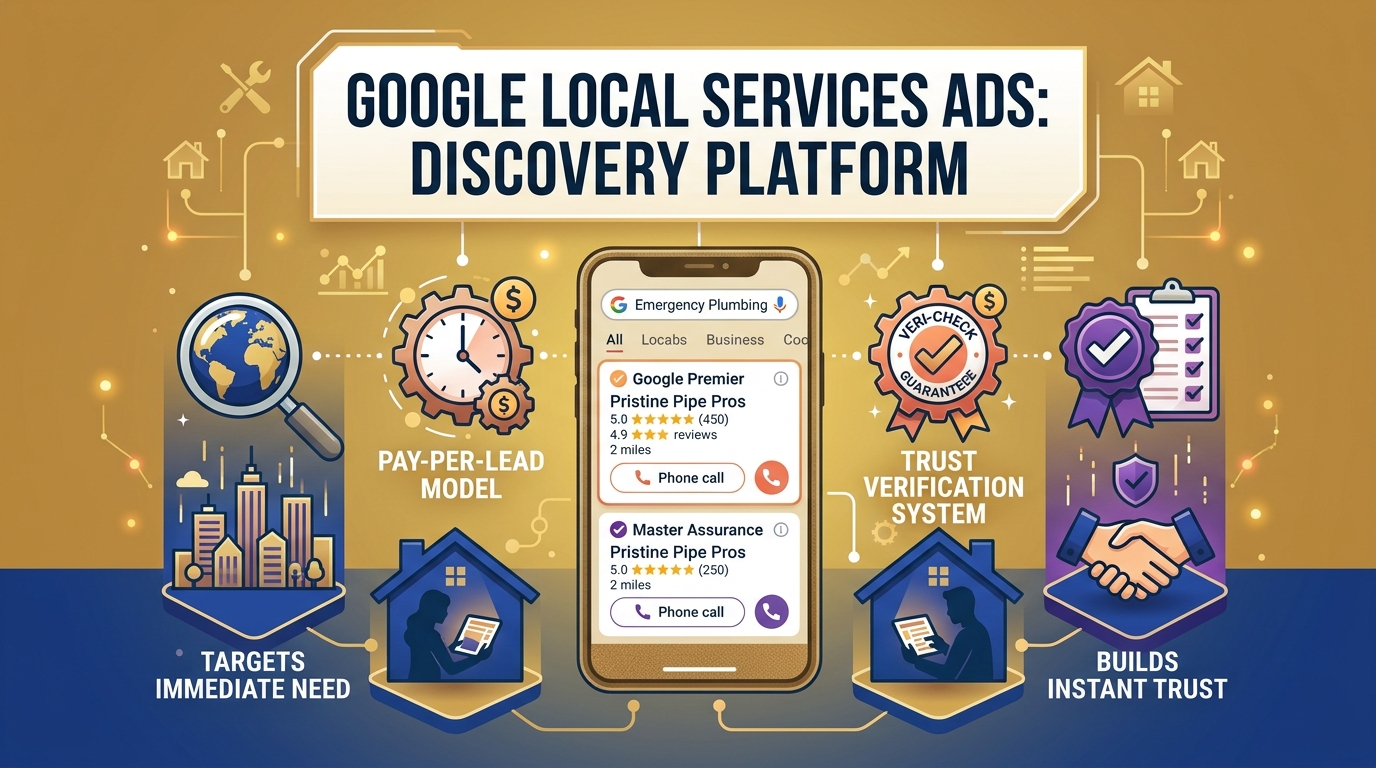
Google Local Services Ads put your business in front of people searching for exactly what you offer, right when they search for it. A search like "emergency plumber near me" is about as high intent as lead generation gets, since the person already knows they need help and is actively looking for someone to call.
Getting approved takes some paperwork. Google verifies your business license, insurance, and background checks before your ads can run, and it's a pay-per-lead model rather than pay-per-click, so you're charged for valid contacts rather than every click.
Key features:
- Prominent placement at the top of relevant local searches.
- You choose the service area and job types you want to receive.
- Pay-per-lead pricing rather than pay-per-click.
- Google credits some invalid or poor-quality leads back to your budget.
3. Angi: Best for an Established Marketplace
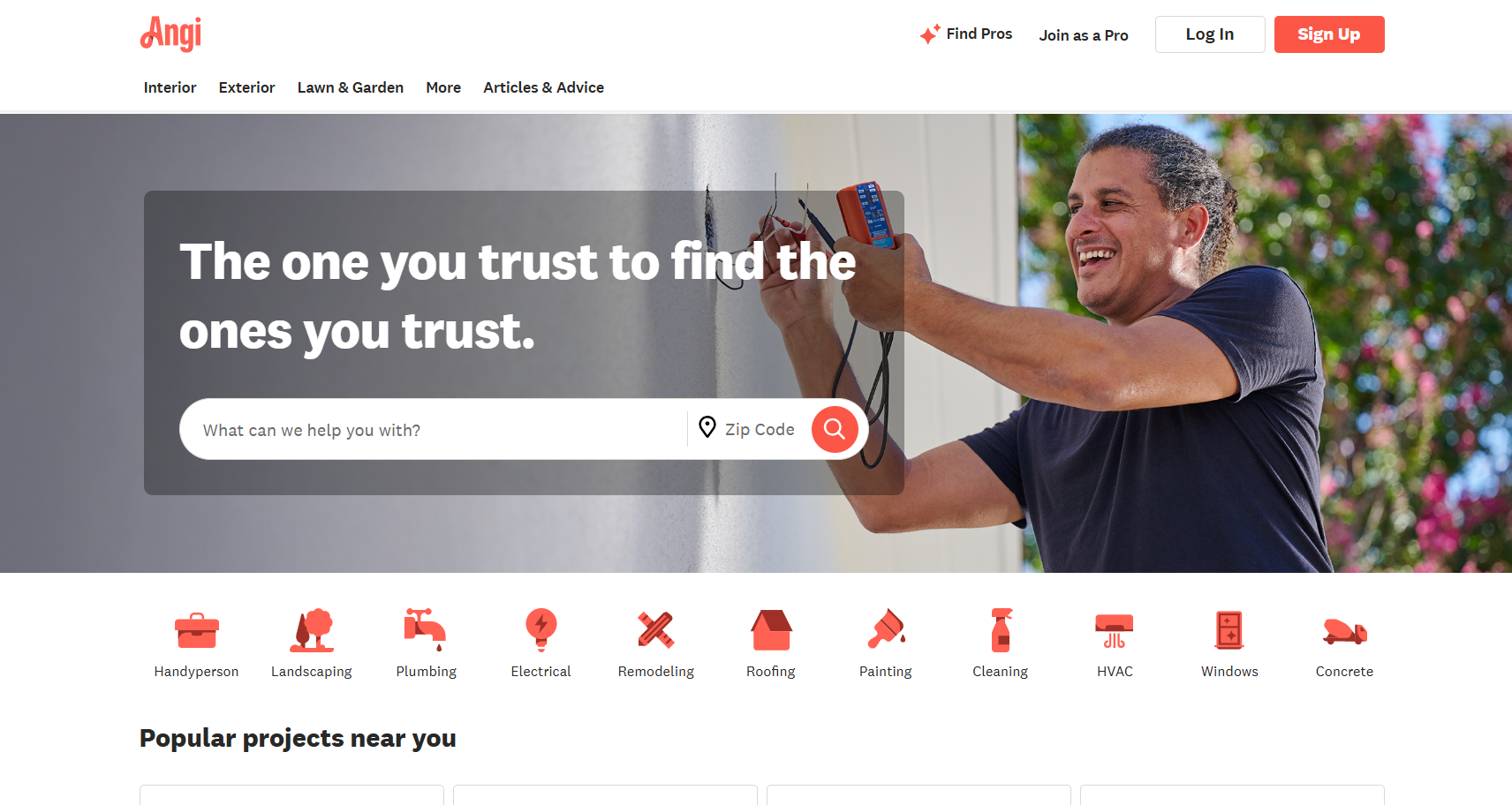
Angi is one of the older, larger homeowner marketplaces, and that scale is its main advantage: a lot of homeowners already know the brand and go there first when they need a repair, a remodel, or a cleaning done. You fill out a profile, set your service area and budget, and Angi routes matching requests to your account.
The tradeoff is that a given request often goes to more than one contractor at once, so speed still matters even on a paid marketplace. Filters help keep the requests roughly in your lane, but they won't stop the built-in competition for each lead.
Key features:
- Large existing base of homeowners already using the platform.
- Filters for project type, location, and budget.
- An approved-pro badge that can help with trust on your profile.
- Leads are often shared with more than one contractor at a time.
4. Thumbtack: Best for Choosing Your Jobs
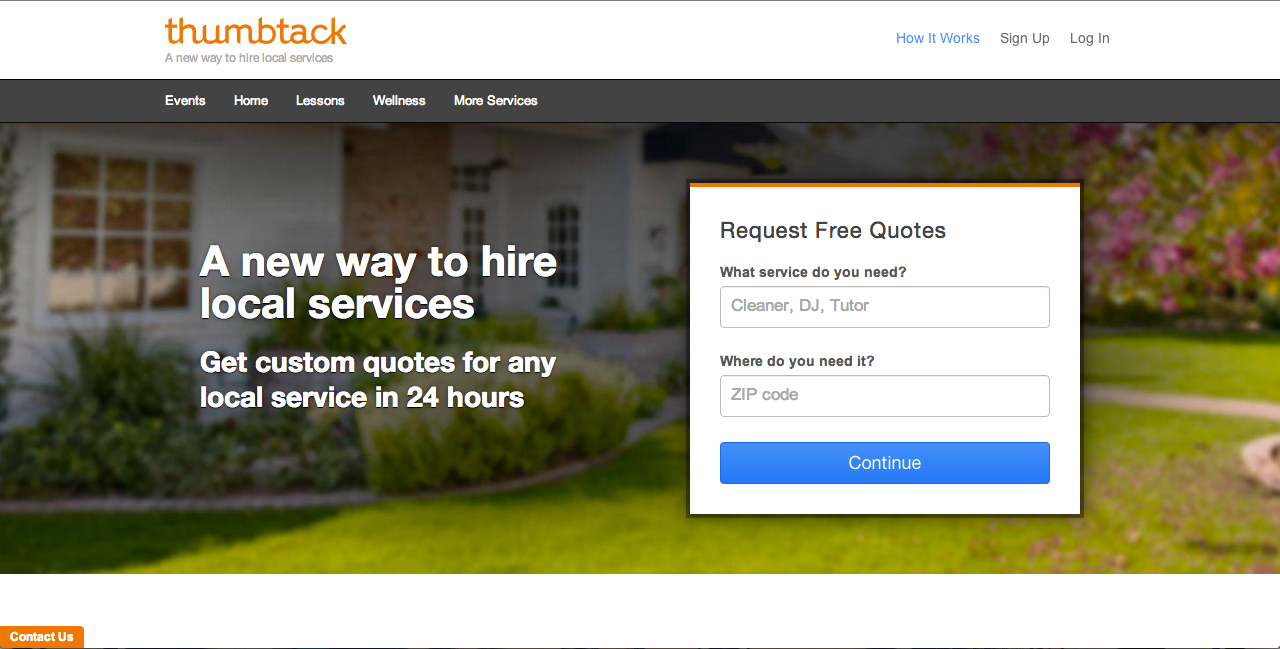
Thumbtack works well for businesses that want more control over which jobs they're matched with. You build a profile with reviews, prices, and work photos, then set the cities, schedule, and job types you actually want, which helps a business avoid getting flooded with small jobs when it wants bigger ones (or the reverse).
Pricing works on a per-lead basis with a cap you set yourself, and an opportunities tab lets you browse jobs outside your usual match criteria if you want to bid on something extra.
Key features:
- Targeting by service, location, schedule, and job type.
- A maximum price you're willing to pay per lead.
- A public profile with reviews and past work photos.
- Tracks response time, which affects how often you get matched.
5. Field Service Booking Software: Best for Converting Leads You Already Have
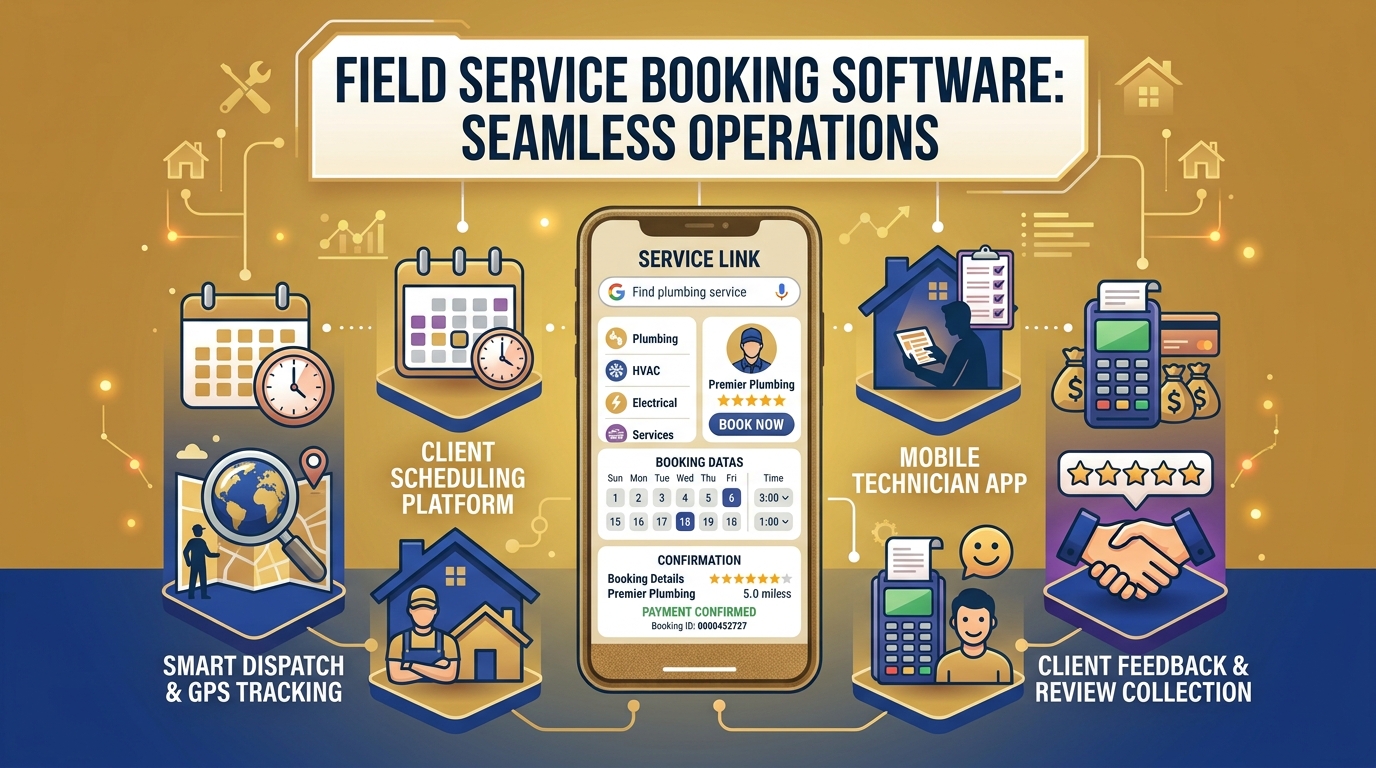
Tools like Housecall Pro aren't a lead source on their own, they're where the leads from everything else actually turn into booked, paid jobs. A booking widget on your website or Google Business Profile lets a homeowner see open times and book directly, and a live calendar means nobody books a slot your team can't actually cover.
The value shows up over time more than on day one: automated follow-ups bring past customers back, and review requests after a job help with the local search visibility that feeds tools like Google Local Services Ads in the first place.
Key features:
- Online booking synced to a live technician calendar.
- Lead intake forms that capture the job details before the visit.
- Automated follow-ups and review requests after a job closes.
- Tracks which channel each lead actually came from.
How to choose
Most home service businesses end up running more than one of these at once rather than picking a single winner. A practical starting point: add your local Facebook groups to GroupSignal since it costs the least to start and the leads are free once you're watching the right groups, then layer in a paid, higher-volume channel like Google Local Services Ads or Angi once you know your close rate and can justify the per-lead cost. Add booking software once enough leads are coming in that manual scheduling starts costing you jobs.
Start with the free lead source that's already there.
Start watching your groupsFAQ
What's the best lead generation tool for a small home service business?
It depends on budget and how hands-on you want to be. GroupSignal works well as a low-cost starting point since it surfaces free, high-intent requests from Facebook groups; paid platforms like Google Local Services Ads scale further but cost more per lead.
How much should a home service business expect to pay for leads?
It varies widely by trade, location, and platform, from $79 a month for a Facebook group monitoring plan to $20 to $100 or more per lead on a pay-per-lead marketplace. A lead is worth paying for as long as its cost is well below the job's value.
Do I need more than one lead source?
Most established home service businesses use two or three at once, usually a paid channel for volume and a free or low-cost channel like Facebook groups for margin, rather than relying on a single source entirely.
Are Facebook group leads actually worth pursuing?
Yes. Someone asking their neighborhood group for a recommendation has already decided to hire, they just haven't picked who yet. The tradeoff is that those posts need to be caught quickly, which is the exact problem a monitoring tool like GroupSignal solves.
Ready to stop scrolling groups yourself?
Start watching your groups